N- Butanol About
- A solvent for dyes in printing inks and other products
- As an additive in polishes, cleaners and stain removers
- As a swelling agent for textiles
- As an extractant in the production of drugs, antibiotics, hormones, vitamins, alkaloids and camphor
- As a solubilizer in the textile industry, for example as an additive in spinning baths or a carrier for colouring plastics
- As an additive in de-icing fluids and gasoline (to prevent carburettor icing)
- In paper and thin-layer chromatography
- As a humectant for cellulose nitrate
- As a feedstock for the production of glycol ethers
- As a starting material for various butyl monocarboxylates which are widely used as solvents
- As a feedstock for the production of flotation aids
Versatile Applications in Industryn-Butanol serves as a key solvent and chemical intermediate, used extensively in the production of coatings, resins, plastics, and pharmaceuticals. Its compatibility with organic solvents makes it ideal for chemical synthesis and various manufacturing processes. Whether for laboratory or industrial-scale applications, its high purity (minimum 99%) ensures consistent performance across diverse sectors.
Safe Storage and HandlingOwing to its flammability and moderate volatility, n-butanol must be stored in tightly closed containers in a cool, dry, and well-ventilated area away from heat sources and ignition points. Adhering to safety regulations during transportation and storage, as per ADR/RID/IMDG/IATA guidelines, helps maintain product integrity and workplace safety. Proper storage extends shelf life up to two years.
FAQs of n-butanol:
Q: How should n-butanol be stored to ensure safety and longevity?
A: n-Butanol should be stored in tightly closed containers placed in cool, dry, and well-ventilated areas away from sources of heat and ignition. Following these guidelines not only enhances safety but also preserves its quality for up to two years.
Q: What are the common industrial applications of n-butanol?
A: n-Butanol is primarily used as a solvent, a chemical intermediate in manufacturing plastics and pharmaceuticals, in coatings, resins, and as a fuel additive. Its miscibility with organic solvents and moderate volatility make it valuable in various production processes.
Q: When is n-butanol classified as dangerous goods during transport?
A: Due to its flammable properties (Hazard Class 3, UN 1120), n-butanol is classified as dangerous goods during transport under ADR/RID/IMDG/IATA regulations. Proper labeling and packaging are required to comply with safety standards.
Q: Where can n-butanol be procured in bulk quantities in India?
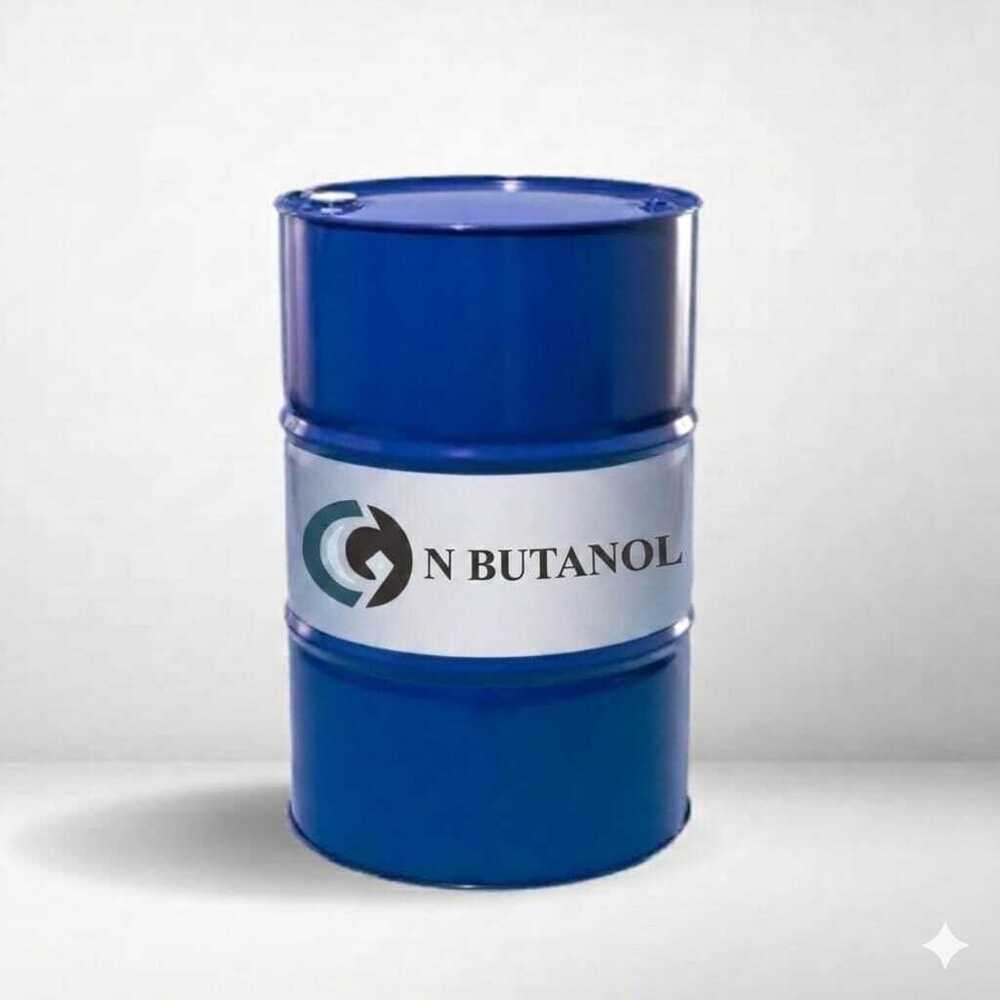
A: n-Butanol is available through various distributors, exporters, suppliers, traders, and wholesalers throughout India. It is commonly supplied in drums, IBCs, and via tank trucks depending on customer requirements.
Q: What precautions should be taken when handling n-butanol?
A: Use personal protective equipment such as gloves and safety goggles, and ensure adequate ventilation. As n-butanol is toxic if ingested and flammable, avoid inhaling vapors, and keep the substance away from sources of ignition.
Q: How does n-butanol benefit industrial processes?
A: n-Butanols low viscosity and miscibility with other solvents enable efficient blending in chemical syntheses and manufacturing. Its neutral pH and consistent purity provide reliable results in laboratory and industrial applications.
Q: What ecological considerations are associated with n-butanol?
A: n-Butanol may be harmful to aquatic environments with long-lasting effects. Spills should be contained, and waste disposal should adhere to environmental safety regulations to minimize ecological impact.







 Send Inquiry

 Send Inquiry
 Send Inquiry
 Send SMS
 Call Me Free
 English
 Spanish
 French
 German
 Italian
 Chinese (Simplified)
 Japanese
 Korean
 Arabic
 Portuguese